Saturday, February 13, 2010

Office 2010 general available on June 15 2010

That Office would be released in June was news last November, but now Paul Thurrott mentions a hard date June 15th 2010 in his weekly WinInfo Short Takes.
GA or General Availability means that RTM should be at least a month before that, but I expect even 2 months.
Next week is February vacation in the Boston area (which, unlike much of the country, doesn't do a March spring break), and although I'd like to go to Barcelona for the Mobile World Conference and Microsoft's Windows Mobile 7 unveiling, I'll have to do that virtually—because we're going to Florida with another family on vacation. Of course, vacations for me are virtual vacations, and I'll still be working. So aside from some email-response slowness, it should be business as usual here.

Leo and I recorded the Windows Weekly podcast on Thursday at the usual time, so you can expect the new episode to appear by the weekend, as usual. Be sure to check out the SuperSite for Windows, however, because I'm now doing weekly Windows 7 feature overviews and tips, and publishing both to the site each week.

Microsoft planning new Windows 7 piracy check

Microsoft said on Thursday that it plans to release a Windows Activation Technologies Update for Windows 7 that will detect 70 known activation exploits.
The update will be distributed on Microsoft's Genuine Windows site on February 16 and will be available from the Microsoft Downloads Center on February 17. Joe Williams, Manager of Microsoft's Genuine Windows team, confirmed the update will also be offered through Windows Update as an ‘Important’ update later this month.

Williams stressed that the update is voluntary and will not jeopardize users privacy. "Although the update contacts Microsoft’s servers to check for new threats...these checks do not include any personally identifiable information" he added.

The update will check for 70 known activation exploits. If any activation exploits are found users will be notified their copy is not genuine and the desktop wallpaper will be switched to a plain black desktop. Periodic reminders and a persistent desktop watermark will also remind users that their copy is not genuine.

Tuesday, July 7, 2009

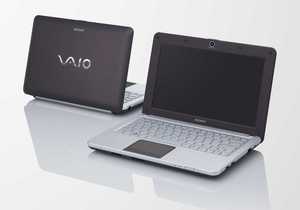
Sony's first netbook


After all the noise Sony made about avoiding the term "netbook" with the release of its Vaio P ultraportable, and the statements Senior Vice President Mike Abary made about the Eee PC before that, it was beginning to look like Sony was never going to release a device in the netbook/mini-note form factor. But that has changed.

Today, Sony officially launched its first netbook. The 10.1-inch Windows XP-based Vaio W runs on a 1.66 GHz Intel Atom N280, has 1 GB of RAM, and a 160 GB SATA HDD. It's equipped with 802.11b/g/n, Bluetooth, a built-in Webcam, and offers 1366 x 768 screen resolution -- higher-than-usual for netbook screens.Unlike many other companies who are aligning with mobile broadband chipmakers and network operators to make their products truly mobile, Sony says the Vaio W is for use in the home as a secondary or maybe even tertiary computer.

To retain the traditional Vaio emphasis on multimedia, the W comes with Vaio Media Plus streaming multimedia software, which lets the netbook interact with DLNA-compatible household devices, such as a PC, PlayStation 3, or HDTV. But since it is a netbook after all, it is being touted less as a media portal, and more as a creature comfort.

The company paints the device as an Internet companion suitable only for the most superficial tasks. Sony's introduction of the Vaio W in Europe says, "While watching TV or reading a magazine, you've probably experienced the urge to look up something on the Internet that you've just seen or read but couldn't be bothered getting up to your desktop PC..." That's where the Vaio W is useful.

It's quite emblematic of Sony's attitude toward netbooks. The $999 Vaio P offers a smaller footprint, is equipped with GPS, mobile broadband, and the same Vaio Media Plus software mentioned earlier, but is absolutely not a netbook. The W, which Sony calls a "mini-note" in English language releases, and an "Internetbook" in Japanese language releases, is stripped of most of its mobility features and is being marketed as a mostly superfluous and unnecessary device. After all, Abary did say if netbooks caught on, "We're all in trouble. That's just a race to the bottom."

If you can be bothered to get up off the couch and buy one, the Vaio W will debut in August for $499, and can be pre-ordered at Sonystyle.com.


Thursday, June 25, 2009

China accuses Google of breaking the law

The Chinese government has blocked access to Google across large swathes of the country and accused the internet giant of breaking Chinese law.

An initial nationwide ban saw screens go blank between 9pm and midnight on Wednesday.

However, Google was inaccessible in several cities and on some mobile phone networks yesterday evening, almost 24 hours after the ban expired.

China's Foreign ministry accused Google's English-language search engine of spreading vulgar content and made it plain that various "punishment measures" had been carried out by the government.

"I want to stress that Google China is a company operating within China to provide Internet search services and it should strictly abide by Chinese laws and regulations," he said.

A spokesman for Google admitted that a range of Google services, including Gmail, its email site, had been cut off. "We hope that service will be fully restored soon".

Google has been repeatedly blocked in China for upsetting the government. The first block came as long ago as 2002. However the latest action is the biggest crisis the company has faced so far and could endanger its future business on the mainland.

Although the government accused Google of spreading pornography, several commentators speculated the block may be connected to competition with the local internet search engine, Baidu.

Google was roundly criticised by CCTV, the state broadcaster, which relies on Baidu for a large slice of advertising revenue. Although Baidu leads Google in the Chinese market, it has been suffering lately, particularly since its marketing department went on strike in May.

Jeremy Goldkorn, the founder of Danwei, a website that analyses Chinese media, said that the order to ban Google had probably been vaguely communicated to local internet companies, who continued to block the website after the ban had been lifted.

"Google's stated mission is to organise all the information in the world. The Chinese government has a similar idea. The two have always had an uneasy relationship," said Mr Goldkorn.

Wednesday, June 24, 2009

Facebook wants you to do it live

When Facebook launched its latest redesign, it became evident that the company was putting a lot of emphasis on real-time information--inspired, undoubtedly, by the runaway success of Twitter. Now the company's rolled out two small but crucial new features that put instant updates even more front and center.

First, Facebook is aiming to use the "publisher" tool--formerly known as the status update box--as members' gateway to the Web at large. Starting Wednesday and rolling out gradually, according to a post on the company blog, a beta version of the new content-sharing box will allow members to select exactly how public or private to make each piece of content that they share. The post by Facebook engineer Ola Okelola explained that something shared on a profile can be visible by friends, friends of friends, friends and networks (school, region, or company), user-created custom friends groups--or everyone on the Web.

Facebook's probably hoping that this will spur people to share more content: if members know that sharing a video, a photo, or even a status message won't by default go out to everyone who can see their profile, they might be more likely to share things along the lines of party photos and videos of their kids.

But, wait. There's more.

In addition, a post on the Facebook developer blog Wednesday explained that developers can now take advantage of live-streaming status update boxes much like the one that CNN used during President Obama's inauguration this January. "With the Live Stream Box on your website, users log in using Facebook Connect and share updates that appear both within the Live Stream Box and on their Facebook profiles and in their friends' home page Streams," the post by Tom Whitnah explained. "Each post includes a link back to the Live Stream Box on your site so users can discover the live event and immediately join based on their friends' recommendations."

It's intended so that people watching an event simultaneously can comment in sync on Facebook. And it's also supposed to be a no-brainer to create your own, meaning that Facebook is hoping a lot of developers and site owners will jump on this bandwagon.

"The Live Stream Box is easy to install and takes just a minute to set up," the post added. "To get the Live Stream Box on your website, get a Facebook API key, upload a small file to your website, and then embed a few lines of code into your Web page."

This is a move clearly aiming in the direction of Twitter, where real-time updates and discussions around events have become so commonplace that members regularly agree on a "hashtag" to flag related posts in advance of the event. (For the inauguration, for example, it was #inaug09.) The question is whether Twitter use has already become the standard for chronicling and commenting on events in real time--will enough people be willing to use Facebook widgets rather than apps built on Twitter?

Block scripts in Firefox

The Internet is full of threats like cross-site scripting attacks and clickjacking. A lot of these attacks work by injecting scripts in web pages that you don't even know are there. You can give yourself a modicum more protection by running a Firefox plug-in calle

d NoScript.

NoScript blocks all scripts from running until you authorize them. Let me show you how it works.

Go to addons.mozilla.org and search for NoScript or get it from Download.com. Intsall it like you would any add-on. Once you have it installed, look in the bottom right corner at the little S with the cross-out symbol.

Clicking on it brings up a sub-menu that allows you to choose how to handle scripts on the page you're at. The safest way to go is not to allow any scripts. You'll never fall victim to code that doesn't run.

But some sites won't work without scripts so, the next safest thing is to Temporarily allow only the scripts you need and or trust. A lazier and slightly less safe method is to temporarily allow all on a page.

The next more convenient level, but also next less safe is to permanently allow scripts either individually or all for a page. This becomes necessary for things like your Bank's website or Google Docs where you don't want to constantly allow scripts every time you launch your browser. If you permanently allow scripts from a site, you're putting your trust in that site that it will never allow itself to be infected by a malicious script.

The worst thing you can do is globally allow all scripts. You might as well not run NoScript at that point. If you have allowed a script on a page and you change your mind about it, you can always choose forbid, to start blocking it again.

Running noScript means you're going to have to do a bit more thinking about pages you surf to. It was enlightening when I first started running NoScript which of my banks and utilities worked just fine without scripts and which became disabled. If nothing else, NoScript gives you more control over what risks you expose yourself to on the Net.

Monday, May 25, 2009

VMware releases its 'cloud OS'

VMware has released the latest version of its core virtualisation platform, vSphere 4, claiming it acts as a cloud operating system to the datacentre.

The product, the renamed successor to VMware Infrastructure 3, was made generally available on Wednesday, having been announced in April. The company says vSphere 4 will allow companies to centrally manage servers, storage and networks in the datacentre as though they were a single pool of computing resource.

Potentially, the new platform can reduce capital and operational costs by up to 30 percent in consolidation ratios, and 20 percent in power consumption, according to VMware.

"The bottom line is that this will enable customers to remove a lot of unnecessary overhead costs in the datacentre, where they might currently only be using 10 percent of server capacity," said Fredrik Sjostedt, VMware's EMEA director of product marketing. "vSphere 4 operates within the datacentre like a normal OS on a single server, but it provides access to the entire infrastructure, from storage to memory and switches."

The key improvements in the latest version of the platform are improved scalability for large-scale environments, more sophisticated management tools to control security and service levels, and an increased flexibility for customers choosing heterogeneous hardware, software and service-delivery models.

One of the key new features of vSphere 4 is the additional functionality provided by the 'virtual distributed switch', says Sjostedt. Previously, virtualised servers each needed their own virtual switch, a complex and time-consuming process. With vSphere 4, it is possible to create a single virtual switch that can manage the entire infrastructure.

"What's interesting is that the physical networking team can now manage virtualised infrastructure for the first time, using the normal management tools. This makes the entire configuration process much easier, and reduces overall complexity," Sjostedt said.

VMware is building private rather than public clouds, but potentially organisations will be able to move virtual machines to third parties, according to Chris Ingle, a research analyst with IDC. "It's hard to measure who is ahead in the market, but VMware is showing some strong performance numbers with this release," Ingle said.

The most useful new feature in vSphere 4 for customers is likely to be the increased level of support for CPU, memory and storage, said Ingle. This may persuade enterprises that currently do not use virtualisation to make the leap, he said.

Thursday, May 21, 2009

Virgin Media trials 200Mbps broadband

Broadband speed freaks take note: cable broadband purveyor Virgin Media has upped the ante by announcing a trial of 200Mbps broadband - four times faster than its current fastest fat pipe service.

The company said it will use the trial to assess the commercial viability of deploying a 200Mbps service in the UK - and to investigate the kind of applications consumers could use regularly in such a speedy future.

Around 100 'pilot customers' will eventually be involved in the trial, which started last week in Ashford, Kent and will run for at least six months. The ISP claims it is the fastest implementation of DOCSIS3 technology (Data Over Cable Service Interface Specification) in the world - faster even than cable services in Japan and the US which have 160Mbps and 101Mbps respectively.

Possible next-gen broadband apps could include HD and 3D TV entertainment services, remote delivery of IT support to home users, videoconferencing and home surveillance, according to the ISP.

At the end of last year Virgin launched its current fastest 50Mbps service - still the fastest consumer broadband service available in the UK. However BT has been making noise on the speed front - pledging to roll out fibre to 10 million homes by 2012, enabling speeds of up to 100Mbps and opening up the possibility that Virgin could be lose its headline-speed crown.

Ian Fogg, principal analyst at Forrester Research, told silicon.com that while he doesn't believe Virgin will be offering a commercial 200Mbps service anytime soon the company is nevertheless firing "a shot across the bows" of DSL providers to let them know it has more to offer.

"Virgin Media is clearly positioning around the speed of its broadband service and they're looking to make hay while the speeds of their rivals using DSL are limited by the copper telephone line," said Fogg.

"Virgin Media are shaking up the UK broadband market. They're looking to increase [consumer] dissatisfaction with speed."

But the analyst said the trial is not just about posturing: "There's a genuine piece of work to be done here," he said, adding: "It's all very well testing something in the lab but actually giving even a small number of consumers this service into their homes will deliver different information, different feedback."

One area where the trial could well shine a light in Fogg's view are on "bottlenecks" lurking elsewhere in the network.

"You get a point where the web servers, the general speed of the internet becomes the bottleneck - not the connection into someone's house. And I would expect that 200Mbps would reveal those bottlenecks elsewhere," he said.

"How fast a particular service is depends on all sorts of things - the speed of the web server to deliver the webpage, the speed of the connection of that web server onto the internet, the connection across the internet, the connection through that internet service provider's network and then there's the connection into the house… and of course there's the connection inside the house."

Fogg added that wi-fi routers can't currently support 200Mbps - so wireless home networks would also constrain users' speed dreams.

Sunday, May 3, 2009

Is the Chip Canary Starting to Tweet Again?

Chip sales are up slightly for March, but it's too soon to pop the champagne corks.

Further evidence that a tech sector recovery, however weak, is beginning to take place came from the Semiconductor Industry Association, which reported that global chip sales rose 3.3 percent in March over February.

However, it's not party time just yet. Because January was such a disaster, and February not much better, the SIA reports Q1 2009 sales were $44 billion, down 30 percent from $62.8 billion in the first quarter of 2008, and down 15.7 percent from the fourth quarter 2008 sales of $52.2 billion.

The $14.7 billion in March, a modest uptick from the $14.2 billion in February, comes across all regions except Japan, which is being hit with a very hard economic downturn.

Chip sales are considered a leading indicator of the health of the tech sector, since everything is built on semiconductors. Every desktop, laptop, server or smartphone has a number of chips in it. If sales can continue to bounce back, that would be a leading indicator of recovery.

However, a number of market researchers, including SIA and iSuppli as well as Gartner, IDC and In-Stat have all said it would be years before the market recovers to 2007 levels.

The first hints of recovery came earlier this month when Intel (NASDAQ: INTC) chief executive Paul Otellini said during the company's conference call to discuss earnings that sales picked up during the quarter. By March, he said Intel was actually getting expedited orders, meaning customers were asking them to hurry with the delivery.

"The modest sequential rebound in worldwide sales in March suggests that demand has stabilized somewhat, albeit at substantially lower levels than last year," said SIA President George Scalise in a statement.

"There are some bright spots such as smartphones and netbook PCs, but there are no clear signs of early firming of demand in other major end markets such as automotive, corporate information technology, and consumer electronics," he added.
Scalise also said he expected global stimulus packages by various governments would begin to take effect beginning in 2010.

Intel Improves Power Management in Datacenters

New software gives a more accurate measure of power in use, and shifts it to where it is needed, so long as you buy a Nehalem server.

Intel has unveiled the Intel Data Center Manager, a software development kit for monitoring power consumption on datacenter servers and adjusting power consumption on an as-needed basis.

The caveat? The servers have to utilize Intel's Intelligent Power Node Manager embedded in Intel's newly launched Xeon 5500 "Nehalem" generation of server chips to fully use this software.

The software can monitor intelligent power supplies, but to get the full benefit of thermal and power management, the Intelligent Power Node Manager has to be present on the hardware and exposed.

The software, released Thursday, is designed to give a more accurate look into the power being consumed in a server's cabinet, which can hold a number of racks or blades. The problem, as Jon Khazam, vice president and general manager of the manageability and middleware division at Intel (NASDAQ: INTC) noted, is that people build to the wrong specs.Each cabinet has a few power supplies, as much for redundancy as for powering the racks. If a cabinet has, for example, three power supplies with a combined 6,000 kilowatts, then the cabinet won't be populated with anything beyond 6,000 kilowatts total power draw, and usually less. The maximum power is listed on the power supply's nameplate.

The problem is people build to the maximum spec. If a rack-mounted server says it has a 300 kilowatt draw, then the most racks going into that cabinet is 20. The problem is, Khazam noted, servers don't run at their maximum draw. They usually operate at some power level below that.

"There's been the general challenge of dealing with power and constraints of power," he told InternetNews.com. "They tend to design a datacenter at the maximum of the nameplate power spec, which ends up introducing a lot of overbuild into the datacenter, where there's a lot more capacity to handle servers than they end up deploying."

The Data Center Manager works in two areas; on the individual rack and on the datacenter at large. On an individual rack, it gives an accurate measure of the overall average power draw, not the maximum draw. It shows individual units and the total power draw in the entire cabinet. Administrators can then limit each rack's power draw. For example, a 300 watt max rack might be limited to 150 or 200 watts. This allows for more compute density to be added.

Power sharing that works

When one rack in the cabinet is running at the upper limits of its power capacity, the software can then examine the other racks, find ones that are drawing much less power than they have allocated, and give the power to the racks that need it.

In one example, Intel worked with Chinese search engine provider Baidu and found it could increase cabinet density by 20 to 40 percent just by populating the cabinet according to average draw, not theoretical maximum. The research is detailed in a Intel white paper.

On a larger scale, power management can be aggregated not just among individual racks in a cabinet but across the whole datacenter. Data Center Manager's console lets admins set thermal and power policies for all systems, so if there are computers needing more power while others are idle, the idle ones give up their available juice for the ones that need it.

Thursday, April 16, 2009

Smiling EV Debuts on Earth Day

Peapod_01

The long-awaited, often-advertised Peapod will be available for order on Earth Day, April 22. Coincidentally, the 22nd also is Administrative Assistant's Day. We expect to see a lot of greenies and maybe some secretaries tooling around in their $12,500 Peapods at no more than 25 miles an hour.

While the Peapod prototype had clear driver and passenger doors that looked like a Dyson vacuum cleaner, the production version (shown above) of the neighborhood electric vehicle resembles George Jetson's Deux Chevaux. Company director and brand guru Peter E. Arnell, whose initials inspired the company's name, told Treehugger.com the car's appearance was inspired by "Japanese bullet trains, storm troopers from the film Star Wars, space helmets and turtles." There's also a very prominent "smile" to the car's grill, but what else would you expect from a man whose firm devised Pepsi's new logo with the Cheshire grin and laughably pretentious backstory?

The feel-good vibe continues with a glance at the in-dash iPod (sold seperately). Edmunds says every trip concludes with a carbon-footprint analysis, while another app tells you exactly how much money you've saved by leaving the family truckster at home.

Arnell says the Peapod isn't a neighborhood electric vehicle, even if the National Highway Transportation Safety Board and his company's own website do. Arnell callls it a Mobi, a new category he's "branded" in much the same way automakers branded 4x4s "SUVS." Regardless of what you call it, the Peapod tops out as 25 mph as required by law for NEVs.

This pod has been cast from Peapod Mobility. Originally a division of GEM, a Chrysler subsidiary that's been churning out small electric vehicles for more than 10 years, the new Peapod Mobility is a wholly owned subsidiary of Chrysler. While GEM's e-series NEVs are popular in retirement communities, as utility vehicles on college campuses and as runabouts for Republican presidential candidates, the entire Peapod experience is aimed at high-tech urban commuters. Edmunds reports the all-electric four-seater will be sold direct to consumers from the Peapod website and marketed extensively to college students. Zune holdouts need not apply: The Peapod requires an iPod or iPhone to start the car, which doesn't make much sense to us.

The first 'pods will be delivered to buyers by October.

Photos: Peapod

Peapod_04

Peapod_02

Peapod_03

Source

Wednesday, April 8, 2009

Conficker Attacks Pakistani Internet Users


The PTCL (Pakistan Telecommunications Company Limited), on April 3, 2009, alerted Internet users in the country about attacks from the dangerous Conficker worm, saying that the virus was striking most of the Pakistani online surfers just as it was hitting surfers in other countries.

Dr. Sadik Al-Jadir, Senior Executive Vice-President, (Commercial) PTCL, stated that the worm had slowed the speed of the Internet bandwidth, as reported by The Nation on April 4, 2009. Al-Jadir further said that the Conficker virus had targeted the popular operating systems worldwide, affecting a massive number of personal computers.

He also stated that most of the Internet and broadband users in Pakistan were encountering browsing problems because of the virus, and were reportedly dialing 1218 to contact Technical Support. The executive VP reported that there was a fourfold increase in the number of incoming calls to 1218 Broadband Technical Support since April 1, 2009.

Moreover, the security specialists stated that the malware prevents users from accessing websites, which offer the worm's removal programs.

Notably, the Conficker virus is a highly complicated and prevalent worm in the history of Internet. In recent days, security researchers remained largely troubled with this malware. However, IT security experts hope that the volume of PCs infected with the worm would decline soon.

This decline stems from the fact that two security investigators belonging to the global, non-profit research organization Honeypot Project have invented a technique with which administrators can easily detect infected computers on their wider networks. The technique would aid in eliminating the infection from the PCs as well as diminish the possibilities of the spread of infection across the entire network. Meanwhile, this method is already being used as part of the popular commercial and free network scanners.

Suggesting precautionary measures, the security specialists said that users needed to regularly update their computer systems with the most recent updates of Windows operating software as well as the latest antivirus as it would prevent the worm from penetrating into the systems. Also, users needed to turn off the Autorun facility to remain guarded from the virus, they added.

Wednesday, April 1, 2009

New technology translates human thought into robot action


An Asimo robot raises its left hand in response to the thoughts of a test subject. (Photo courtesy of Honda Research Institute Japan et al)

A research team gave the public a glimpse of the future Tuesday as it demonstrated technology allowing a person to move Honda's Asimo robot simply by thinking about it.

The technology, developed by the Honda Research Institute Japan (a subsidiary of Honda Motor Co.), the Advanced Telecommunications Research Institute (ATR) and Shimadzu Corp., allows a person to direct Asimo to raise its right and left arms, run, or "eat" by thinking of specific actions.

The system, a combination of electroencephalography (EEG) and near infrared spectroscopy (NIRS), does not use electrodes in direct contact with the brain, but rather a helmet that reads brain activity. Specifically, the helmet processes patterns in brain waves and blood flow in the brain associated with each action and then transmits the appropriate commands to Asimo.

For example, if a person thinks about moving his or her tongue, then Asimo will raise its hand to its face as though eating. Among the three human test subjects to participate in the research, the system was successful in interpreting their thoughts and sending them on to Asimo about 90 percent of the time.

However, there is currently a 7-9 second delay between the human controller's thoughts and Asimo's reaction, and due to the wide differences in brain activity patterns between individuals, the system must be specifically calibrated to each user.

In the future, the research team hopes to apply the technology to hands and feet-free driving and household robots.

Sunday, March 29, 2009

Intel details future graphics chip at GDC

On Friday, Intel engineers are detailing the inner workings of the company's first graphics chip in over a decade at the Game Developers Conference in San Francisco--sending a signal to the game industry that the world's largest chipmaker intends to be a player.

During a conference call that served as a preview to the GDC sessions, Tom Forsyth, a software and hardware architect at Intel working on the Larrabee graphics chip project, discussed the design of Larrabee, a chip aimed squarely at Nvidia and at Advanced Micro Devices' ATI unit.

Intel

And Nvidia and AMD will no doubt be watching the progress intently. Intel's extensive and deep relationships with computer makers could give it an inside track with customers and upset the graphics duopoly now enjoyed by Nvidia and AMD. In the last decade Intel has not competed in the standalone, or "discrete" graphics chip market where Nvidia and AMD dominate. Rather, it has been a supplier of integrated graphics, a low-performance technology built into its chipsets that offers only a minimal gaming experience. (In the 1990s, Intel introduced the i740 GPU which, in relative terms, was not a success.)

Forsyth said that there is not yet a Larrabee chip to work with--it's expected late this year or early next year--and that "a lot of key developers are still being consulted on the design of Larrabee." But Intel will offer ways for developers to test the processor, he said. "On the Intel Web site there will be a C++ prototype library. It doesn't have the speed of Larrabee but has the same functionality. Developers can get a feel for the language, get a feel for the power of the machine."

Beyond games, Intel is also trying to catch a building wave of applications that run on the many-core architectures inherent to graphics chips. Nvidia and AMD graphics chips pack hundreds of processing cores that can be tapped for not only accelerating sophisticated games like Crysis but for doing scientific research and high-performance computing tasks.

One of the largest test sites for Larrabee is Dreamworks, which will use Larrabee for rendering and animation. To date, Dreamworks had to wait overnight to get a rendering project completed. "Using (the) Nehalem (processor), Dreamworks can almost do it in real time and it is only going to better with Larrabee," said Nick Knupffer, an Intel spokesperson.

Larrabee is "Intel's first many-core architecture," Forsyth said. "The first product will be very much like a GPU. It will look like a GPU. You will plug it into a machine and it will display graphics," he said. (GPU stands for graphics processing unit.)

"But at its heart are processor cores, not GPU cores. So it's bringing that x86 programmable goodness to developers," Forsyth said. Larrabee will carry the DNA of Intel's x86 architecture, the most widely used PC chip design in the world.

Larrabee

ntel is touting the performance of Larrabee's vector unit.

(Credit: Intel)

"It's based on a lot of small, efficient in-order cores. And we put a whole bunch of them on one bit of silicon. We join them together with very high bandwidth communication so they can talk to each other very fast and they can talk to off-chip memory very fast and they can talk to other various units on the chip very fast." In-order processing cores are used, for example, in the original Pentium design and in Intel's Atom processor.

"It's the same programming model they know from multicore systems already but there's a lot more of them," he said.

The centerpiece of the chip's core is the vector unit, used to process many operations simultaneously. "The interesting part of the programming model is the SIMD (single instruction, multiple data) vector unit and the instructions that go with it," Forsyth said. "We want to show off this big new vector unit and the instruction set."

Forsyth described what the vector unit can do and how it works with the scalar unit. "(The vector unit) can do 16 floating point operations every single clock. That's a lot of horsepower. Even in just one of these cores--and we have a lot of these cores. So it's a very high-throughput unit. The good thing is that it's independent of the scalar unit. You can issue instructions on the scalar unit and vector unit at the same time. The scalar unit is extremely useful for calculating addresses, doing flow control, doing housekeeping--and keeps all those miscellaneous tasks off the real powerhouse, which is the vector unit."

At GDC, Intel is encouraging developers to experiment. "They're going to have questions about how do I find 16 things to do at once. But a lot of it is just getting in there and playing with the thing," according to Forsyth. The GDC sessions will be a tour around Larrabee's instructions--"how to actually use these new instructions," he said.

And what about markets beyond gaming? "A funny thing happened on the way to the architecture. We designed this architecture to be 100 percent graphics focused. Whatever we needed to do to get graphics good, we did. And then a year ago, we looked at what we had and said how much of this stuff is actually specific to graphics. It turns out, very little. Graphics workloads are increasingly similar to GPGPU (general-purpose graphics processor unit), increasingly similar to high-powered (high-performance) computing. So, we actually have very little that is specific to graphics. Most of the instruction set is very general-purpose."

Skype for iPhone: It's official

Months after teasing us at CES with an announcement of Skype's native VoIP client for the iPhone, the free Skype for iPhone will finally be available to download from the iTunes App Store sometime on Tuesday. We got a chance to sit down with the application's principal engineer before the announcement was made at CTIA 2009, to see Skype for iPhone do its thing. While most of the features aren't too surprising--Skype does want to maintain some consistency across its mobile applications, after all--there are a few capabilities that are notably missing, and a few iPhone-only perks that are refreshing to see.

Skype on iPhone

At long last, Skype has come to the iPhone.

(Credit: Skype)

In terms of navigation, Skype's VoIP app for iPhone looks more like your traditional iPhone app than it does Skype 4.0 for Windows. For many who already prefer Apple's sleek interface archetype, that's a triumph, but those who enjoy Skype's branding may feel disappointed.

Skype's screens are well organized and use the iPhone's ability to add filters, for instance, to sort your contacts alphabetically, or by who's online. There's chatting as well, though Skype's flagship feature is its VoIP calling that's free to other Skype users and an inexpensive per-minute fee to landlines. Calls on Skype for iPhone work only if you're in range of a Wi-Fi network, so your call quality will in part be at the mercy and strength of wireless networks nearby--calls will not work over the cell phone network on the iPhone (but chatting will.) Assuming your connection is solid, you can dial a number or quickly call a contacts stored in your address book. iPod Touch users will need earphones with an embedded mic to talk. During a call, you can mute the line, go on hold, or put the call on speakerphone. In the My Info window, you can follow a link to buy more SkypeOut credit online.

Taking a photo from within Skype to serve as your avatar image, or pulling a picture in from the camera roll are two iPhone-only features that makes use of the phone's hardware attributes. Another imperfect, but still neat, feature is the ability to accept incoming conference calls. While you won't be able to initiate a call, we're told, you will be able to jump on one if a buddy invites you in. We hope the next version includes placing conference calls from the iPhone.

Skype left a few more skills out of its maiden iPhone voyage. SMS, setting up a conference calling group, purchasing SkypeOut credit directly, and being able to field a second incoming Skype call are a few. File transferring and getting Skype voicemail native on the phone are two more. We expect to see at least two of these added in the next version, but we'll hope for more.

Skype versus the competition
Here's the big question on our minds: will Skype's iPhone app replace competitors like Nimbuzz and Fring, which focus on cross-network IM but also include VoIP calls with Skype pals even though they've been available for the iPhone for months? Kurt Thywissen, the principal engineer for Skype for iPhone, thinks so. He says what the other apps use is a workaround that requires them to channel calls through a server and transcode audio, resulting in poorer-quality calls than Skype can do in its own app. He may be right, but those who IM more than they vocalize probably won't ditch the likes of Fring too soon. They might, however, let Skype handle the calls and let another app take care of the multinetwork chatting.

Inside Skype for iPhone--photos

Amazon, Microsoft reject 'Open Cloud Manifesto'

The cloud-computing field may be in its infancy, but there is a fight breaking out at the preschool.

A group of Web services providers, reportedly including IBM, is set to unveil a "manifesto" next week that lays out a number of principles for open cloud computing. Two of the biggest names in the field, though, say they aren't signing on.

Microsoft posted blog message to that effect on Wednesday night, while Amazon.com on Friday said it, too, is not among the companies signing the document.

"Like other ideas on standards and practices, we'll review this one," Amazon said in a statement. "Ideas on openness and standards have been talked about for years in Web services. And we do believe standards will continue to evolve in the cloud-computing space. But what we've heard from customers thus far, customers who are really committed to using the cloud, is that the best way to illustrate openness and customer flexibility is by what you actually provide and deliver for them."

Amazon noted that over the past three years, it has made its Web services available on different operating systems and programming languages.

Microsoft, for its part, said there were some things it agreed with in the manifesto, but others that were either too vague or did not reflect its interests. The company also objected to the fact that it was shown the document just last weekend, not allowed to make changes, and given just 48 hours to decide whether to sign.

"We were admittedly disappointed by the lack of openness in the development of the (Open) Cloud Manifesto," Microsoft's Steven Martin wrote in the blog post. "What we heard was that there was no desire to discuss, much less implement, enhancements to the document, despite the fact that we have learned through direct experience. Very recently, we were privately shown a copy of the document, warned that it was a secret, and told that it must be signed 'as is,' without modifications or additional input."

Martin wrote that "it appears to us that one company, or just a few companies, would prefer to control the evolution of cloud computing, as opposed to reaching a consensus across key stakeholders (including cloud users) through an 'open' process."

Although the document has yet to be released, one of its proponents, Enomaly's Reuven Cohen, has said it will be will be released on Monday. In a blog post, Cohen suggests that there will be at least a dozen signatories of the document, including "several of the largest technology companies."

"The manifesto does not speak to application code or licensing but instead to the fundamental principles that the Internet was founded upon--an open platform available to all," Cohen said. "It is a call to action for the worldwide cloud community to get involved and embrace the principles of the open cloud."

Cohen also posted a follow-up blog thanking Microsoft for the attention generated by the rejection of the manifesto.

"In one move, Microsoft has provided more visibility to our cloud interoperability effort than all our previous efforts combined," Cohen wrote.

As for the manifesto itself, we'll have to wait until Monday to see it, but Cohen's blog and this site give some idea where they are headed.

Wednesday, March 25, 2009

YouTube Blocked in China, Google Says

Google said Tuesday that its YouTube video-sharing Web site had been blocked in China.

Google said it did not know why the site had been blocked, but a report by the official Xinhua news agency of China on Tuesday said that supporters of the Dalai Lama had fabricated a video that appeared to show Chinese police officers brutally beating Tibetans after riots last year in Lhasa, the Tibetan capital.

Xinhua did not identify the video, but based on the description it appears to match a video available on YouTube that was recently released by the Tibetan government in exile.

It purports to show police officers storming a monastery after riots in Lhasa last March, kicking and beating protesters. It includes other instances of brutality and graphic images of a protester’s wounds. According to the video, the protester later died.

“We don’t know the reason for the block,” a Google spokesman, Scott Rubin, said. “Our government relations people are trying to resolve it.”

Mr. Rubin said that the company first noticed traffic from China had decreased sharply late Monday. By early Tuesday, he said, it had dropped to nearly zero.

China routinely filters Internet content and blocks material that is critical of its policies. It also frequently blocks individual videos on YouTube. YouTube was not blocked Tuesday or Wednesday in Hong Kong, the largely autonomous region of China. Beijing has not interfered with Internet sites there.

“The instant speculation is that YouTube is being blocked because the Tibetan government in exile released a particular video,” said Xiao Qiang, adjunct professor of journalism at the University of California, Berkeley, and editor of China Digital Times, a news Web site that chronicles political and economic changes in China.

Mr. Xiao said that the blocking of YouTube fit with what appeared to be an effort by China to step up its censorship of the Internet in recent months. Mr. Xiao said he was not surprised that YouTube was a target. It also hosts videos about the Tiananmen Square protests and many other subjects that Chinese authorities find objectionable.

The video about the beatings was pieced together from different places, Xinhua said on Tuesday, citing an unidentified official with the Tibetan regional government in China.

There has been no independent assessment of whether the video is authentic. In a statement sent via e-mail, Lobsang Nyandak, a representative of the Tibetan government in exile, said that the video was authentic.

The government did not directly address whether YouTube had been blocked. When asked about the matter at a news conference, a Foreign Ministry spokesman, Qin Gang, said: “Many people have a false impression that the Chinese government fears the Internet. In fact, it is just the opposite.”

Even as China steps up its censorship efforts, the country’s Internet participation is booming. Often, critics often find a way to avoid censors and debate controversial topics.

Ai Weiwei, a prominent Chinese artist, has been using his blog on Sina.com to criticize the government’s management of the rescue and relief efforts after the devastating earthquake in May in Sichuan Province.

In recent months, Beijing has announced major crackdowns on pornographic Web sites, even citing Google and other large companies for listing the sites on their search engines. Many critics say they believe that Beijing is using the word “pornography” as a rationale to eliminate Web sites that it deems troublesome.

YouTube has been blocked for varying periods of time in several countries, including Pakistan, Thailand and Turkey. These countries often state directly why they have acted.

David Barboza contributed reporting from Shanghai.

Tuesday, March 24, 2009

PTCL doubles its broadband speed at no extra cost

Islamabad—“As out gift to the nation on this Pakistan Day, PTCL has doubled your Broadband speed, at no extra cost” this was announced by Dr Sadik Al-Jadir, SEVP Commercial.

He further stated that “PTCL aspired to provide the fastest and most cost effective broadband access to all users in Pakistan. Being the largest IP Serviced provider, we have a vision to provide broadband access in all cities throughout the country.” PTCL broadband has made Kbps speeds obsolete by upgrading all packages to Mbps. The minimum package speed offered by PTCL is now 1 Mbps.

An existing user paying Rs 1199/- per month for a DSL 512K connection will now be upgraded to 1Mbps connection at no extra charge. The same goes for existing 1Mbps and 2Mbps connects, these will be upgraded to 2Mbps and 4Mbps connections at existing rates. This will make PTCL the fastest and the largest Broadband Service in Pakistan.

PTCL is the leading and the largest broadband service provider in Pakistan offering broadband in more than 130 major cities and towns i.e. Karachi, Hyderabad, Mirpurkhas, Hala, Sukkur, Jacobabad, Khairpur, Larkana, Multan, Bhaipheru, Okara, Pakpattan, Sahiwal, Faisalabad, Lahore, Islamabad, Rawalpindi, Abbottabad, Attock, Gujar Khan, Jehlum, Peshawar, Quetta etc.

Saturday, March 21, 2009

Terrafugia's flying car makes maiden voyage

Terrafugia Transition

It may look like a Volkswagen Beetle in the belly of a carp, but the Terrafugia Transition (at right) is a bona fide flying car.

(Credit: Terrafugia)

This story has been updated. See below for details.

The start-up Terrafugia first popped up on our radar screens in early 2006 with a one-fifth scale model, $30,000 in prize money, and an urge to build a car that could fly. Or is that an airplane you can take on the highway?

Some signs point strongly to the latter. Terrafugia describes its Transition vehicle as a "roadable aircraft" and is pitching it in part as giving private pilots an easy travel alternative when bad weather makes flying a bad idea, or simply to avoid having to take a separate car to the airport. Also, in the eyes of the Federal Aviation Administration, the vehicle falls into the light sport aircraft category.


On March 5, Terrafugia got to show that--whatever the eventual business prospects--the Transition can indeed fly. The maiden voyage (the duration wasn't specified) took place at the Plattsburgh International Airport in New York, with a retired U.S. Air Force Reserve colonel in the pilot's seat. The flight followed six months of static, road, and taxi testing.

As a car, the two-seat Transition is designed to be easy on garages and oncoming traffic--its wings fold up quite snugly. In folded mode, the approximately 19-foot-long vehicle is 80 inches wide, and 6 feet, 9 inches high. As an airplane, it stands a few inches shorter and has a wingspan of 27 feet, 6 inches.

The vehicle runs off unleaded fuel from your run-of-the-mill gas station for both terrestrial and aerial travel, cruising at highway speeds on land and better than 115 miles per hour in the air.

But Woburn, Mass.-based Terrafugia (Latin for "escape from land") still has a long road ahead of it. The vehicle that flew earlier this month is still just a proof of concept, and a production prototype has yet to be built, tested, and certified. The company says it expects to make the first customer delivery of a Transition in 2011.

Update March 20, 9:41 a.m. PDT: Terrafugia CEO/CTO Carl Dietrich rolled out the Transition for an appearance on the CBS Early Show. He said that the price tag for the carbon fiber-built vehicle is $194,000, and that the (refundable) deposit is $10,000.

In the video below, you can get a look at the controls inside the cockpit--er, at the driver's seat?--and watch the wings unfold.


Watch CBS Videos Online

Apple leaks 17-inch iMac for $899?

(Credit: Apple)

It's kind of funny when an Italian-language site breaks a wee bit of English-language-based Apple news, but that's what happened when SetteB.IT spotted a small mention of an $899 17-inch iMac for the education market on Apple's own Web site.

Currently, Apple is offering iMacs only in 20- and 24-inch screen sizes. The 20-inch model starts at $1,199, while the 24-incher starts at $1,499.

No word on when the "new" 17-incher will arrive (or if it's really new), but we'll await official confirmation from Apple.

Anybody interested? In this economy, I think the sub-$1,000 market is a good spot for Apple to play in--especially when it comes to cash-strapped parents of students.